Uncategorized

Sports Bra 101: Running and Beyond

A recent study1 reported, “9.5 million women in the UK are not supporting their breasts properly when they run.” That stat does not shock me at all, especially when we want to look cute, fashionable 😊

Why wear a sports bra?

If you want to help keep those breasts healthy, then wear a sports bra that fits! Research shows that on average, a woman’s breast moves 9.08cm with every stride when running. The average breast weighs between 250 and 300g and any unsupported movement (ie: Running) and causes three-dimensional movement: up-down, in-out, and side-to-side.

This can result in discomfort, chafing and strain on the breasts’ supportive tissue, called the Cooper’s ligaments, which can eventually lead to sagging if not supported. Once stretched, the Cooper’s ligaments cannot revert back to their original position, so it’s important to support your breasts, no matter how far you’re running.

What size running sports bra should I buy?

If you have never worn a sports bra before, start with your usual bra size but be open to trying on different sizes before you find the perfect fit. Different bras will fit differently, so try a few before finding your perfect brand. There are sports bra brands that you can buy according to YOUR size and most specialty running stores carry that brand, such as Moving Comfort, and offer a proper fitting to size you!

How should a sports bra fit?

The first sign that you’ve got the right size when it comes to sports bras is the back band is at the same level all the way round. If it rides up, it’s too big. Your sports bra should fit snugly, but not be too tight that you can’t breathe and you should be able to get no more than one finger under the band or in the cup. And you should NEVER have to wear 2 Sports bras to keep you supported contrary to what you may have heard, seen, or tried yourself. Further, the bra you wear for yoga is not the same bra you should wear for running. There are different bras offer different levels of support. The type you need will depend on your cup size and the type of exercise you do.

1. Low-impact sports bras, used for stretching or walking, are often cut like a crop-top and are, on the whole, made from thinner material.

2. Medium-impact sports bras are a mix between the two, these can sometimes be used for running, but are often not suited to larger-breasted women.

3. High-impact bras (for running) generally use less stretchy material, include supportive seams and overlays and are sometimes even underwired for larger breasts.

How long does a sports bra last?

Just like your running shoes, a sports bra has a termination life too! You’ll need to replace your sports bra every few months, or after around 30-40 washes. As a rule of thumb – you will need three new bras for every one pair of running shoes. The technical fabric of your sports bra will wear in the washing cycle, and its elasticity will diminish during use. To prolong the life of your sports bra, try not to tumble dry it: the heat will destroy the fabric on your bra!
Uncategorized

PATELLOFEMORAL PAIN SYNDROME (Runners Knee)

What is Patellofemoral Pain Syndrome?

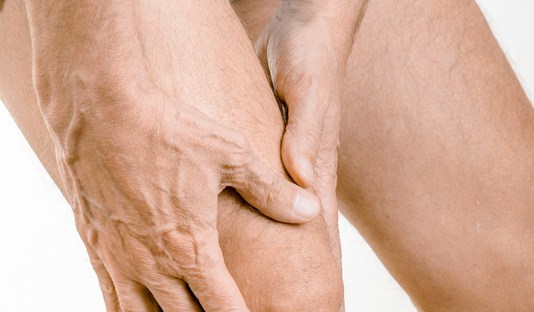
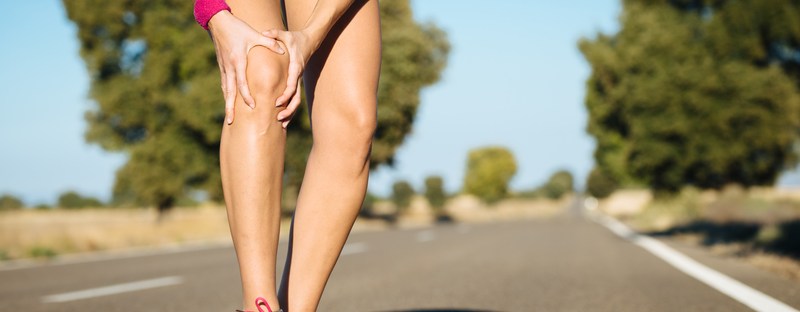
It is pain in the anterior knee at or below the patella caused when the kneecap is tracking wrong on the femur. This leads to the wearing away and cracking of the cartilage under the kneecap. You may experience the following symptoms: deep ache under the kneecap, worse when ascending and descending stairs, worse with downhill running, stiffness after prolonged sitting with the knee bent.

Causes?

There are several things that can make you more susceptible to iliotibial band syndrome. The following would/could contribute to the injury:

  1. Direct traumatic injury
  2. Imbalance of strength within the quadriceps (Vastus Medialis strength needed to help track the patella correctly)
  3. Repetitive stress (wear and tear)

Treatment
In order to combat the pain and train properly, treating the cause of the problem is important. You may have to try multiple modalities until you find the culprit!

  1. Ice
  2. Correct the muscle imbalance
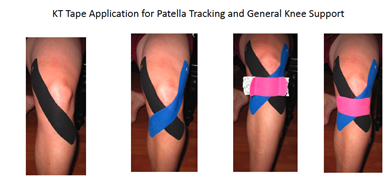
  3. Tape the knee cap (see diagram below)
  4. Stretch

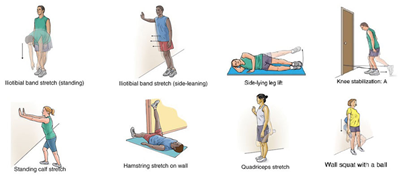
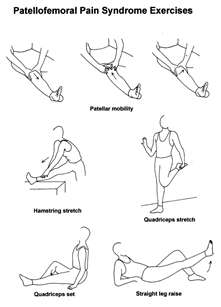
Exercises for Patellofemoral Pain


Stretches = 3 sets, 20-30sec hold; For Strength = 2=3 sets, 12-15reps ; 3 times a week
This is how to tape yourself using KT Tape, or grab an Athletic Trainer, like myself, to tape your knee if possible!
Uncategorized

ILIOTIBIAL BAND SYNDROME

What is Iliotibial Band Syndrome?

It is pain and inflammation on the outside of the knee. The IT band is a fibrous band on the outside of the thigh- when it becomes tight it results in a friction syndrome by rubbing against the femur as it runs along the knee joint or hip joint. The symptoms you experience are usually sharp pain on the outside of the knee and/or progressively worse pain throughout a run.

Causes?

 There are several things that can make you more susceptible to iliotibial band syndrome. The following would/could contribute to the injury:

  1. Weakness of the quadriceps and hip lateral rotators, and probably weakness of the gluteus maximus
  2. Bowed legs
  3. Uncorrected overpronation,
  4. Leg length discrepancy
  5. Hard downhill running
  6. Excessive speed work
  7. Running on banked surfaces

Treatment

In order to combat the pain and train properly, treating the cause of the problem is important. You may have to try multiple modalities until you find the culprit!

  1. Rest and ice
  2. Stretching
  3. Switch to softer surfaces
  4. Shoes with ample heel support and rearfoot cushioning
  5. Strengthening the quadriceps, hip lateral rotators, and gluteus maximus
  6. Stretching the IT Band, quads, and hip rotators, as well as gluteus maximus

Exercises for Iliotibial Band Syndrome

Stretches = 3 sets, 20-30 sec hold; For Strength = 2=3 sets, 12-15 reps

Uncategorized

PLANTAR FASCIITIS

What is Plantar Fasciitis?

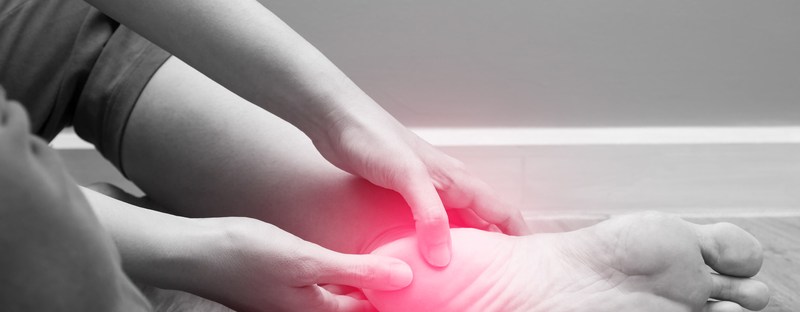
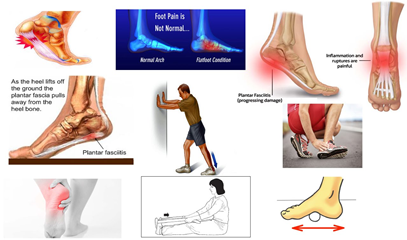
Inflammation of the plantar fascia which is a thick, fibrous band of tissue in the bottom of the foot which runs from the heel to the base of the toes. The symptom(s) you may feel is pain and local tenderness beginning at the heel and radiating to the arch, heel pain on the first couple of steps of the day, and/or pain at the beginning of a run but better at the end of the run.

Causes?

There are several things that can cause this condition. The following would/could contribute to the injury:

  1. Inflexible calf muscles
  2. A tight Achilles tendon,
  3. Uncorrected overpronation
  4. Overtraining
  5. Hard surfaces for training
  6. High arches

Treatment

In order to combat the pain and train properly, treating the cause of the problem is important, just like any other injury. The following can be tried one at a time to find the true culprit!

  1. Ice massage
  2. Custom orthotics and/or running shoes fit for your foot
  3. Stretching the calf
  4. Wearing a night splint ( I love the Strassburg Sock for this one instead of a bulky boot)

Exercises for Plantar Fasciitis

  1. Roll a golf ball or frozen 20oz water bottle before bed on bottom of foot for 20-30 seconds, 3 reps – I like placing mine in freezer to make it cold for the inflammation
  2. Stretch the bottom of the foot 20-30 seconds, 3-4 reps each morning and evening
Injury Prevention

Shin Splints

What is Shin Splints?

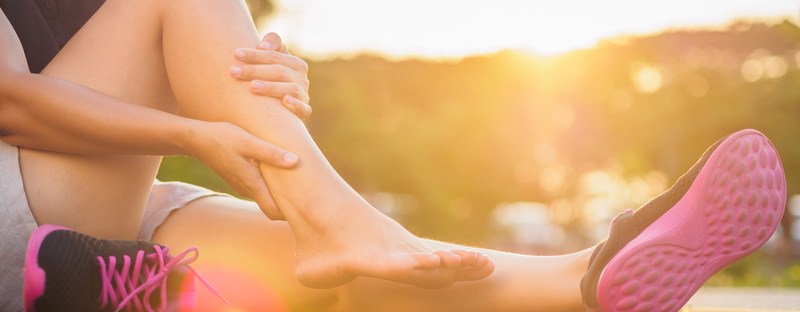
It is inflammation of the muscle attachments and interosseous membranes of the tibia (shin bone) on the front of the lower leg. The symptoms you experience is soreness along the inside of the shin, pain at the beginning of the run, gets better during the run, sore afterwards.

Causes?

There are several things that can cause shin splints. The following would/could contribute to the injury:

  1. Overtraining
  2. Overpronation of the feet
  3. Weak Tibialis Anterior (front of shin)
  4. Old shoes
  5. Running on concrete/asphalt
  6. Tight Achilles tendon

Treatment

In order to combat the pain and train properly, treating the cause of the problem is important. Ou may have to try multiple modalities until you find the culprit!

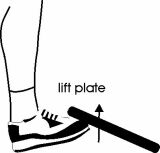
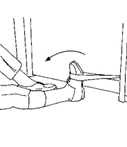
  1. Strengthening exercises for anterior lower leg muscles (see Exercises Below)
  2. Footwear to correct overpronation, better shock absorption
  3. Run on softer surfaces,
  4. An anti-inflammatory, ice
  5. Stretching of the calf muscle and Achilles Tendon

Exercises to Strengthen Those Muscles

Do these 3 sets, light weight or resistance band, for 12-15reps only; 2-3 times a week

OR

You can walk on your heels around the house for 1 minute at a time 2-3 times a week as well to strengthen the anterior tibialis muscle