
Uncategorized

Protein: What is the Hype and What Type?

Protein! What is the Hype and What Type?

WHAT IS A HIGH-QUALITY PROTEIN?

A high-quality protein = 3 Things

  1. Protein digestibility (i.e. “Can your body break it down?”)
  2. Amino acid content (i.e. “What’s really inside the protein?”)
  3. The resulting amino acid availability to support metabolic function (i.e. “Will your body be able to use those amino acids the way you want it to?”)

The process of digesting food begins in your mouth when you chew. But protein is unique in that your body’s digestion of it truly begins in the stomach and continues into the small intestine. Within those organs digestive enzymes and other components break down intact proteins into smaller chains of amino acids, the building blocks of protein. Before a chain can be absorbed into your bloodstream, it must be shortened into individual amino acids and put into an “amino acid pool.” Only then, when these amino acids hit the bloodstream, can they be transported and do all the good for your body. Your body can turn to this pool and take the exact amino acids it needs to create a larger protein molecule required for one function — such as building muscle or helping with the quality of your skin.

HIGH-QUALITY PROTEIN SOURCES

The following are top sources of protein:

Dairy products; milk, whey powders, cheese and cottage cheese, yogurt

Eggs

Seafood and fish

Beef

Chicken

Bison

Pork

Pea Protein

Soybeans

Blended meals (beans and rice)

Vegan protein powders with multiple protein sources

AMINO ACIDS: WHY YOU NEED THEM IN YOUR LIFE

Every source of protein has a different amino acid profile. These amino acids are a big determinant of whether or not a protein is high-quality. Your body can produce many amino acids on its own. But there are some it can’t make. Which is the following:

histidine

isoleucine

leucine

lysine

methionine

phenylalanine

threonine

tryptophan

valine

These are the “essential amino acids,” and you must get them through your diet only. Any food that contains all nine essential amino acids is known as a “complete protein sources.”

Nearly all animal proteins are highly bioavailable and complete protein sources (the body can use them efficiently and effectively and contain all the essential amino acids). This includes dairy, which supplies many of the amino acids, including a high amount of leucine. However, if you are like me and eat vegetarian mostly then there is still ways to get what is needed, which I explain latter.

While collagen and bone broths are popular for their potential to support joint health and other tissue function within the body, collagen protein is high in only 3 amino acids (glycine, proline, and hydroxyproline). Bone broths may deliver health benefits, but they alone won’t help with muscle building or fat loss (or satisfy your body’s amino acid requirements, unless you add chicken or beef to the broth). I am sure I will upset a few people with that information but knowledge is power.

WHAT ABOUT PLANT PROTEIN?

Conversely, most plant sources have an amino acid profile that differs drastically from that of humans. Many plant proteins are low in various essential amino acids, especially leucine. This is important because leucine plays a critical role in turning on muscle protein synthesis (MPS), which is key for building and repairing muscle tissue. The big exceptions are soy and select sources of pea protein (like pea protein isolate). These vegetarian sources contain all, or nearly all, of the essential amino acids you require. Outside of those sources, most plant-based proteins are not complete. All this means is that consuming one lone source of plant protein cannot support body growth and maintenance. But if you combine different plant protein sources, then you can receive adequate amounts of all nine essential amino acids.

Examples of complementary proteins include combining legumes and grains, such as red beans and rice, or vegetables and legumes, as you’d find in a 9-bean vegetable soup. When you eat complementary proteins, the combined sources equal a complete protein source. You don’t have to do this at the same meal. Your body will store the amino acids as they come in, and then resynthesize proteins as it needs by pulling from body cells and blood supplies later. So, even if you had rice at breakfast and beans at dinner, you’re covered. Often, you need to eat more plant-based protein to get the equivalent amount of amino acids that you would from a smaller amount of animal protein, which is why supplemental plant protein powders can be so effective for those who follow a vegan, vegetarian, or plant-based diet.

RECOMMENDATIONS VARY – SO CHECK IT OUT

Check out the table above I created to find the recommended protein intake by various, reliable sources for all types. Often I have people come to me asking how to “build muscle” after seeing a decline with age. Remember, our muscles atrophy (shrink) as we age for various reasons, so adding better protein sources, along with the recommended amount, help us retain and build muscle to keep us lean and tone. The same goes for those who may be sick with hypermetabolic syndromes, such as cancer patients, burn victims, HIV patients, or any major process that is occurring that requires energy to repair your body and use those essential amino acids to repair skin, build muscle, retain muscle, etc.

Uncategorized

American Heart Month

You hear so much about workouts, body image, etc. but getting back to the basics –> Heart disease is the leading cause of death for both men and women. About 610,000 people die of heart disease in the United States every year–that’s 1 in every 4 deaths. Heart disease is the leading cause of death for both men and women. More than half of the deaths due to heart disease in 2009 were in men.1

Keep it simple! You can make healthy changes to lower your risk of developing heart disease. Controlling and preventing risk factors is also important for people who already have heart disease. To lower your risk:

Watch your weight.

Quit smoking and stay away from secondhand smoke.

Control your cholesterol and blood pressure.

If you drink alcohol, drink only in moderation.

Get active and eat healthy.

For more information, visit https://www.heart.org

  1. “Heart Disease Facts & Statistics.” Centers for Disease Control and Prevention, Centers for Disease Control and Prevention, 2019, http://www.cdc.gov/heartdisease/facts.htm.
Uncategorized

Bad Shoulders? Can’t Bench Press Anymore? The Importance of the Rotator Cuff Muscles

As a Certified Athletic Trainer and a Certified Physician Assistant in Orthopedics, I get asked a lot of questions about the shoulders. It is common for me to hear someone say, “I can’t do a bench press anymore because I have bad shoulders.” Is this you?

Rotator cuff impingement syndrome (RCIS) is a multifactorial disease that can lead to functional limitations and an inability to participate in work, leisure, and sporting activities. This syndrome can be caused by many factors, such as weakness of the rotator cuff and periscapular muscles, decreased pectoral and rotator cuff muscle flexibility, abnormal motion patterns, extrinsic factors (eg, vibration exposure, use of hand tools, workstation height), and trauma. 

Well, guess what?? If you want those lovely shoulder muscles to have muscle definition then you have to have a strong rotator cuff!

What is the Rotator Cuff Muscle Group?

The rotator cuff is a group of four muscles that come together as tendons to form a covering around the head of the humerus. The rotator cuff attaches the humerus to the shoulder blade and helps to lift and rotate your arm.1 Basically, the rotator cuff helps to keep your arm in the shoulder joint properly.

How Do You Properly Strengthen the Rotator Cuff?

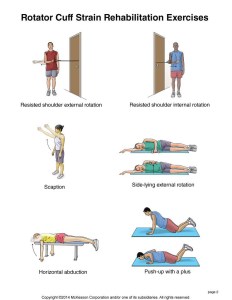
With Resistance Bands at Home: Attach light to medium resistance tubing (lighter than you would think to be honest) to a door hinge, then stand with your left side to it, grasping the handle of the tubing with your right hand. Bend right arm at a 45-degree angle to your side (your elbow is at your hip and your forearm is at a 90-degree angle in a handshake position), then rotate your arm at the elbow, pulling the tubing out towards the right side without pulling your upper arm away from your body—like a door opening on a hinge. Next, stand with your right side towards the door hinge. With your right arm bent at a 45-degree angle next to your side, grasp the handle of the tubing with your right hand and rotate your arm at the elbow, pulling the handle in towards the center of your body. Repeat 10 to 12 times on each side, alternating sides for each set. Figure Below 1

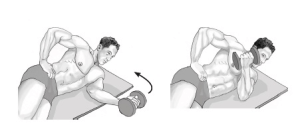
With Dumbbells at Home/Gym:  Internal Rotation: Hold a dumbbell in one hand (again lighter weight, 2-5 lbs is sufficient to start). Lie on a bench close to edge on side with dumbbell in hand. Position elbow on edge of bench against side of body with elbow bent approximately 90°. Position legs on bench for support. While maintaining 90° bend in elbow, lower dumbbell away from body until slight stretch is felt in shoulder. Lift dumbbell toward body by internally rotating shoulder until forearm is across belly. Continue with opposite arm. External Rotation: Next, stand or sit with dumbbell positioned out to side of head; bend elbow, shoulder height with dumbbell above elbow. Then lower dumbbell forward by rotating shoulder. Return and repeat. Continue with opposite arm. Remember, throughout the movement, keep bent elbow (approximately 90°) out to side, shoulder height. Figure Below 2

References:

  1. Armstrong, A. D., & Athwal, G. (n.d.). Our knowledge of orthopaedics. Your best health. Retrieved from https://orthoinfo.aaos.org/en/diseases–conditions/rotator-cuff-tears/
  2. Summit Medical Group Web Site. (n.d.). Retrieved December 1, 2018, from https://www.summitmedicalgroup.com/library/adult_health/sma_rotator_cuff_injury_exercises/#&gid=1&pid=1
  3. Rotator Cuff Exercises. (n.d.). Retrieved December 1, 2018, from https://www.google.com/search?biw=1280&bih=561&tbm=isch&sa=1&ei=TR4DXMb0KoSIgge_m6hI&q=dumbbell external rotation and internal rotation &oq=dumbbell external rotation and internal rotation &gs_l=img.3…36101.39985..40413…0.0..0.79.1133.20……1….1..gws-wiz-img…….0i30j0i5i30j0i8i30j35i39.l11W_1CkHnk#imgrc=4CCnZjzNxI2-BM:


 Figure 1

 Figure 2

Uncategorized

Meal Prepping – It’s OKAY if You Don’t Meal Prep

This is not a brief article about HOW to meal prep…I have said that I am not giving “meal prepping” tips if I am not an “expert” on the topic, which I am not at all. With that said, I am simply going to provide you with your options and that it is OKAY if you DON’T meal prep weekly. So let us start with my meal prepping experience…

My Experience with Meal Prepping

I did the research, bought some meal prepping books at the bookstore, bought the food, came home on a Sunday afternoon to start my meal prepping for a committed six weeks. I enjoyed having my meals ready for the week, both my lunch and dinner, along with my snacks, but with my BUSY schedule, in and out of the operating room, seeing patients, etc. I had no time to eat what I had prepped in the first place ☹ I found most of the time I wasted the food, stuck it in the freezer, and/or only had the dinner I had prepped for the week. Secondly, the AMOUNT OF TIME I had to take on that Sunday was not worth my only two days to relax from work and my usual schedule. After I had prepped all the food, I had to clean ALL THE MESS…omg…I hated taking the hour to clean the kitchen. By the end of the meal prep process, at least for me, it took 4 hours out of my day. Time is precious. In my case, it was not worth the hassle. In the end, I had maintained my same weight and fitness, but wasted time, money, and food. HOWEVER, I have decent self-control when it comes to food. I still did not put processed foods in my system, ate the meals when I could, and if I didn’t eat, then I didn’t overindulge. I stuck to the food I had in front of me only. For a lot of people (and I know because I was one of those people for a long time) it is hard to have self-control when you are hungry!

What You Can Do

Your options are vast and honestly the best option is to try it all until you find the one that works best for you! I have done this in order to even write this article. Start with what is your goal and which option would give you the best outcome. I wanted to make sure that on busy days I am not stuffing my pie hole with empty calories. Listed below are options for you to try:

  1. Meal Prep Service that makes it and delivers it to you (google for your options where you live)
  2. Do It Yourself Meal Prep ( look for books, Pintrest, google, etc for ideas)
    1. Pick Two Days to Meal Prep (Sunday/Wednesday)
    2. Buy Meal Prep Containers for the food you make
    3. Search for Ideas (there are a ton and I am not married to one website, book, etc over another)
  3. Ingredient-and-recipe meal kit service ( ie: Blue Apron, HelloFresh, etc)
    1. Many offer special dietary options now
  4. Wellness Systems to Stay Balanced
    1. Isagenix, Shakeology, etc
    2. Choose one that you like best and maybe do one to two meal replacements along with 1-2 “portion controlled” meals from one of the above-mentioned methods
  5. Mix and Match the Above-Mentioned Options

Conclusion

Want to hear what I do??? I have can say without a doubt I have tried it all…meal prepping, macro counting, meal prep service, no carb after a certain time, low carbs, carb cycling, keto, etc. I will tell you but it doesn’t mean it works for EVERYONE! My schedule can be crazy, with 4:30/5am workouts and 7am OR starts, or late nights in operating room or clinic, and no lunch breaks, my eating can get out of hand quickly. In order to keep myself in check and not have to meal prep, I like to combine two options mentioned above, Isagenix and Blue Apron, along with wholesome snacks 2-3 times a day. My day would look like this:

Breakfast: Isagenix shake (sometimes I throw cereal in it for crunch)

Snack: 2 hardboiled eggs

Lunch: Isagenix shake

Snack: Yogurt

Snack: Cottage Cheese/Nuts

Dinner: Blue Apron Meal of choice ( I like to create out of their 6 options, 3 meals that meet my needs, such as a fish meal, a vegetarian meal, and a low carb meal)

Late night snack if hungry again: Protein shake/Isagenix Chocolate

As I said, try everything and see what works best for you and your goals. Please don’t listen to articles that claim “this is the only way to lose weight and be fit.” The reality is that as long as you are watching your intake in general and eating wholesome meals then you will see yourself feel and look better. I don’t think I need to state the obvious that eating habits that are high in processed foods and sugars are not ideal. We have been hearing this for a long time. In order to get on a healthy eating lifestyle pick an option that works for your schedule! Last but not least….don’t feel pressured into thinking you have to stick to only one thing to make it work. Many times people have asked me why I don’t like meal prepping and for me, that 1 hour of cooking or more and 2 hour clean up on a day off or late night after work is not worth it to me…WORK SMARTER, NOT HARDER 😊

Exercise, Uncategorized

What Is the Best Running Form?

After my last post I had several people want to write about running form. I have been asked as a running coach time and time again, “how do you run?” It might seem odd to some to think there is a “ideal running form” but having proper biomechanics helps! Running starts with practicing your form so that you are more efficient by using muscles groups appropriately, while resting others. So here is the quick and dirty on running form from head to toe! Below is referenced from Runner’s World Author in 2005, JANE UNGER HAHN with a little added tip or two from myself.

Head – How you hold your head is key to overall posture, which determines how efficiently you run. Let your gaze guide you. Look ahead naturally, not down at your feet, and scan the horizon. I like to focus on powerlines out in front of me or tree lines/streetlamps. This will straighten your neck and back and bring them into alignment. Don’t allow your chin to jut out.

Shoulders – Shoulders play an important role in keeping your upper body relaxed while you run, which is critical to maintaining efficient running posture. For optimum performance, your shoulders should be low and loose, not high and tight. As you tire on a run, don’t let them creep up toward your ears. If they do, shake them out to release the tension. I will literally drop my arms and shake them out! Your shoulders also need to remain level and shouldn’t dip from side to side with each stride.

Arms – Even though running is primarily a lower-body activity, your arms aren’t just along for the ride. Your hands control the tension in your upper body, while your arm swing works in conjunction with your leg stride to drive you forward. Keep your hands in an unclenched fist, with your fingers lightly touching your palms. Imagine yourself trying to carry a potato chip in each hand without crushing it (I use to make some of my runners carry potato chips and not crush them). Your arms should swing mostly forward and back, not across your body, between waist and lower-chest level. Your elbows should be bent at about a 90-degree angle. When you feel your fists clenching or your forearms tensing, drop your arms to your sides and shake them out for a few seconds to release the tension.  Basically, like putting something in your pockets!

Torso – The position of your torso while running is affected by the position of your head and shoulders. With your head up and looking ahead and your shoulders low and loose, your torso and back naturally straighten to allow you to run in an efficient, upright position that promotes optimal lung capacity and stride length. Many track coaches describe this ideal torso position as “running tall” and it means you need to stretch yourself up to your full height with your back comfortably straight. If you start to slouch during a run, take a deep breath and feel yourself naturally straighten. As you exhale simply maintain that upright position.

Hips – Your hips are your center of gravity, so they’re key to good running posture. The proper position of your torso while running helps to ensure your hips will also be in the ideal position. With your torso and back comfortably upright and straight, your hips naturally fall into proper alignment–pointing you straight ahead. If you allow your torso to hunch over or lean too far forward during a run, your pelvis will tilt forward as well, which can put pressure on your lower back and throw the rest of your lower body out of alignment. When trying to gauge the position of your hips, think of your pelvis as a bowl filled with marbles, then try not to spill the marbles by tilting the bowl.

Legs/Stride – While sprinters need to lift their knees high to achieve maximum leg power, distance runners don’t need such an exaggerated knee lift–it’s simply too hard to sustain for any length of time. Instead, efficient endurance running requires just a slight knee lift, a quick leg turnover, and a short stride. Together, these will facilitate fluid forward movement instead of diverting (and wasting) energy. When running with the proper stride length, your feet should land directly underneath your body. As your foot strikes the ground, your knee should be slightly flexed so that it can bend naturally on impact. REMEMBER, running midfoot to toe is better for longer distance than trying to run on your toes constantly. If your lower leg (below the knee) extends out in front of your body, your stride is too long.

Ankles/Feet To run well, you need to push off the ground with maximum force. With each step, your foot should hit the ground lightly–landing between your heel and midfoot–then quickly roll forward. Keep your ankle flexed as your foot rolls forward to create more force for push-off. As you roll onto your toes, try to spring off the ground. You should feel your calf muscles propelling you forward on each step. Your feet should not slap loudly as they hit the ground. Good running is springy and quiet.

Breathing – The most difficult part is something I say to each class — Make a beat with your feet and breathe to the rhythm. Don’t be too loud on your feet and still follow the proper form above but try to over-exaggerate at first until you find that rhythm with breathing. I have people try multiple ways to see how the breathing works best. For instance, try for every step, one breath in and one out, or two in and two out, or two in and one long breath out.


Let me know how it goes!