
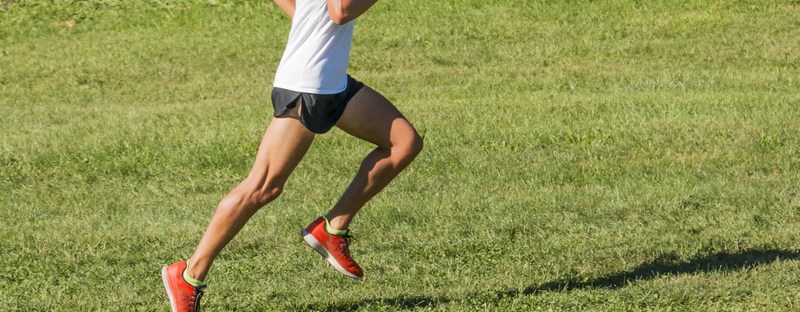
After my last post I had several people want to write about running form. I have been asked as a running coach time and time again, “how do you run?” It might seem odd to some to think there is a “ideal running form” but having proper biomechanics helps! Running starts with practicing your form so that you are more efficient by using muscles groups appropriately, while resting others. So here is the quick and dirty on running form from head to toe! Below is referenced from Runner’s World Author in 2005, JANE UNGER HAHN with a little added tip or two from myself.
Head – How you hold your head is key to overall posture, which determines how efficiently you run. Let your gaze guide you. Look ahead naturally, not down at your feet, and scan the horizon. I like to focus on powerlines out in front of me or tree lines/streetlamps. This will straighten your neck and back and bring them into alignment. Don’t allow your chin to jut out.
Shoulders – Shoulders play an important role in keeping your upper body relaxed while you run, which is critical to maintaining efficient running posture. For optimum performance, your shoulders should be low and loose, not high and tight. As you tire on a run, don’t let them creep up toward your ears. If they do, shake them out to release the tension. I will literally drop my arms and shake them out! Your shoulders also need to remain level and shouldn’t dip from side to side with each stride.
Arms – Even though running is primarily a lower-body activity, your arms aren’t just along for the ride. Your hands control the tension in your upper body, while your arm swing works in conjunction with your leg stride to drive you forward. Keep your hands in an unclenched fist, with your fingers lightly touching your palms. Imagine yourself trying to carry a potato chip in each hand without crushing it (I use to make some of my runners carry potato chips and not crush them). Your arms should swing mostly forward and back, not across your body, between waist and lower-chest level. Your elbows should be bent at about a 90-degree angle. When you feel your fists clenching or your forearms tensing, drop your arms to your sides and shake them out for a few seconds to release the tension. Basically, like putting something in your pockets!
Torso – The position of your torso while running is affected by the position of your head and shoulders. With your head up and looking ahead and your shoulders low and loose, your torso and back naturally straighten to allow you to run in an efficient, upright position that promotes optimal lung capacity and stride length. Many track coaches describe this ideal torso position as “running tall” and it means you need to stretch yourself up to your full height with your back comfortably straight. If you start to slouch during a run, take a deep breath and feel yourself naturally straighten. As you exhale simply maintain that upright position.
Hips – Your hips are your center of gravity, so they’re key to good running posture. The proper position of your torso while running helps to ensure your hips will also be in the ideal position. With your torso and back comfortably upright and straight, your hips naturally fall into proper alignment–pointing you straight ahead. If you allow your torso to hunch over or lean too far forward during a run, your pelvis will tilt forward as well, which can put pressure on your lower back and throw the rest of your lower body out of alignment. When trying to gauge the position of your hips, think of your pelvis as a bowl filled with marbles, then try not to spill the marbles by tilting the bowl.
Legs/Stride – While sprinters need to lift their knees high to achieve maximum leg power, distance runners don’t need such an exaggerated knee lift–it’s simply too hard to sustain for any length of time. Instead, efficient endurance running requires just a slight knee lift, a quick leg turnover, and a short stride. Together, these will facilitate fluid forward movement instead of diverting (and wasting) energy. When running with the proper stride length, your feet should land directly underneath your body. As your foot strikes the ground, your knee should be slightly flexed so that it can bend naturally on impact. REMEMBER, running midfoot to toe is better for longer distance than trying to run on your toes constantly. If your lower leg (below the knee) extends out in front of your body, your stride is too long.
Ankles/Feet To run well, you need to push off the ground with maximum force. With each step, your foot should hit the ground lightly–landing between your heel and midfoot–then quickly roll forward. Keep your ankle flexed as your foot rolls forward to create more force for push-off. As you roll onto your toes, try to spring off the ground. You should feel your calf muscles propelling you forward on each step. Your feet should not slap loudly as they hit the ground. Good running is springy and quiet.
Breathing – The most difficult part is something I say to each class — Make a beat with your feet and breathe to the rhythm. Don’t be too loud on your feet and still follow the proper form above but try to over-exaggerate at first until you find that rhythm with breathing. I have people try multiple ways to see how the breathing works best. For instance, try for every step, one breath in and one out, or two in and two out, or two in and one long breath out.
Let me know how it goes!

 Healthy, Fit, & Busy - OH MY